

Student Dropout Process Mimics a Trial
Decisions relating to student dropout often resemble a trial with students as defendants and teachers as prosecutors and judges. This approach can create barriers between students and staff and raise the issue of the university's mission, according to Ivan Gruzdev, Evgeny Terentiev and Elena Gorbunova of the HSE’s Internal Monitoring Center.
Higher Education Halves the Risk of Poverty
Higher education cuts the risk of poverty by more than half, according to Alina Pishnyak and Daria Popova , leading researchers at the HSE Centre for Studies of Income and Living Standards. Their findings reveal that the household incomes of families where all adults are university-educated stand at 20% above the average, and conversely, in families where none of the adults hold a degree, living standards tend to be below average by a quarter.
Postgraduates at the Institute of Education Become Part of the International Research Community
This year government funding is available for twenty places (4 times more than usual) on the Education and Pedagogical Sciences course at the HSE Postgraduate Institute of Education. Entry exams are in September but 15th May is the deadline for sending in a portfolio to increase your chances of getting a place. Here is a brief description of the course.
Educational Equality is Key to Eliminating Corruption
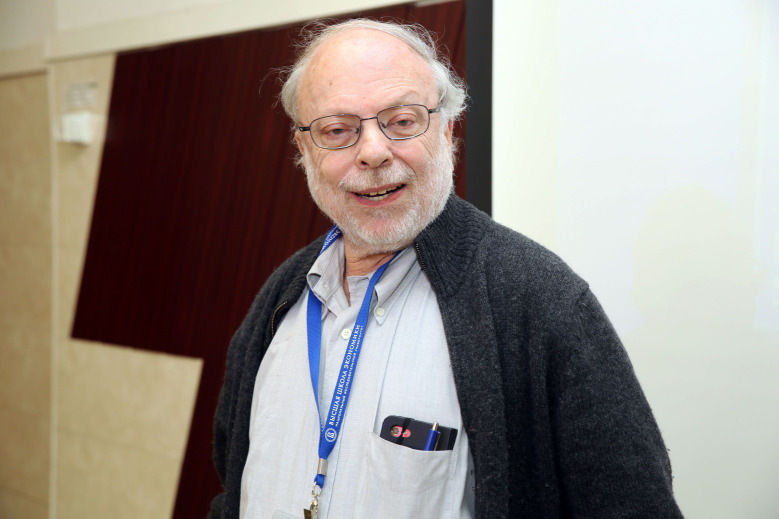
On April 8, Eric Uslaner, Professor of Government and Politics at the University of Maryland - College Park, presented a keynote lecture called ‘The Historical Roots of Corruption’ on the second day of the XVI April International Academic Conference on Economic and Social Development at HSE. Professor Uslaner is a widely recognized expert in political science, with specific interests in political economy, political behaviour, equality, trust and corruption. Among his more recent books is Corruption, Inequality, and the Rule of Law: The Bulging Pocket Makes the Easy Life published by Cambridge University Press in 2008.
Replace 'Scientists' with 'Poets'
State funding for education systems fails to take popular demand into account. About 10% of state-funded places are not in areas that interest school-leavers. There are too few options in the humanities, and too many in engineering, research carried out by the HSE’s Institute of Education, School of Mathematics, the Educational Center of Semantic Technology and Faculty of Economics.
Doctoral Education in Russia in Need of Reform
In an interview for CIRGE Washington University on the ongoing reforms and pending challenges in Russian doctoral education, Senior Research Fellow at HSE’s Institute for Higher Education, Igor Chirikov explains the peculiar economic, social and bureaucratic problems and academic traditions that are hampering the careers of Russian academics but he also gives reasons to be optimistic about change for the future.
Universities Fall into Decay Because of Opposition to Changes
Universities decline not only due to a lack of money, enrollment of weak students, lack of ties with professional communities, and brain drain. Conservatism of their administration, lecturers and scholars is also an obstacle to the life-saving ‘reset’ of universities, Isak Froumin, Academic Supervisor of the HSE Institute of Education, and Mikhail Lisyutkin, Junior Research Fellow at this Institute, say in their paper ‘The Phenomenon of Degrading Universities in Russia. Stating the Problem’.
Workshop on Experimental Methods for Researchers at HSE Institute of Education
On December 12-24 a series of workshops on experimental methods for researchers by Prashant Loyalka, Leading Research Fellow of the International Laboratory for Education Policy Analysis at the HSE Graduate School of Education took place at HSE Institute of Education. He also delivered a series of lectures on ‘Quasi-experimental Research in Education’ for master’s students in Educational and Psychological Measurement.
HSE on Coursera: This is only the start
The 11 educational courses completed in the first year of HSE's cooperation with Coursera won an audienec of 300,000. The courses' lecturers talked about how they succeeded in doing this at a round table at HSE.
Results of the Academic Year 2013/2014
At a meeting of the HSE's Academic Council on November 28, Vice Rector Sergei Roshchin presented a report on the University's educational and methodological activities for 2013/2014.
Deadline for applications to present academic reports - January 20, 2025