

Psychologists from HSE University Discovered How Love for Animals Affects Relationships with People
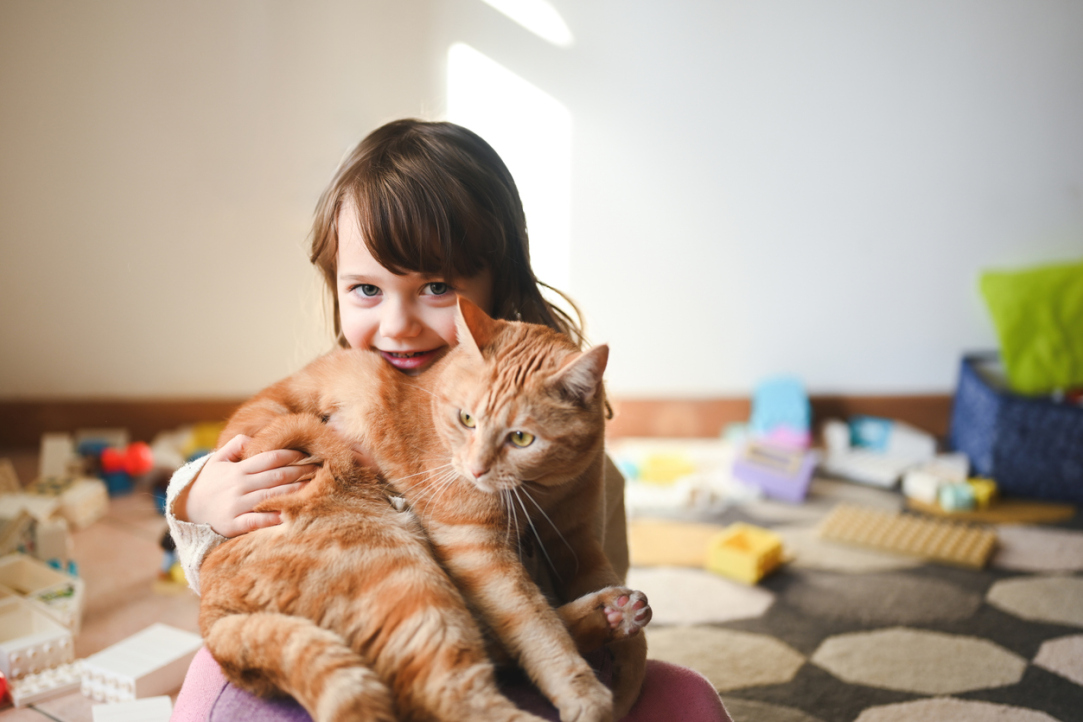
Researchers from HSE University have identified a connection between attachment to pets and attitudes toward nature and other people. The study found that the more joy people derive from interacting with their pets, the more they want to help others. However, love for animals is not always associated with concern for nature. The findings were published in the Social Psychology and Society journal.
In recent years, the social aspects of living with animals have become an increasingly popular topic among scientists, who have found connections between a person's attitude toward their pets and their interactions with society. However, it remained unclear how love for pets affected a person's attitudes toward others and the natural world. To explore this, researchers from HSE University examined how animals influence our sense of belonging to the natural world (ecological identity) and adherence to moral standards and ethical behaviours (moral motives).
Ecological identity refers to a person's sense of connection with nature and awareness of their place in the ecosystem. People with a strong ecological identity tend to care about animals, plants, and even inanimate nature, demonstrating responsibility toward future generations.
Moral motives are internal principles that guide our behaviour toward others. They include helping, avoiding harm, and striving for social justice and order.
Can love for pets help us treat other humans and the world with compassion, or is it a feeling directed solely at one creature? To answer this question, researchers from the HSE School of Psychology, Faculty of Social Sciences, surveyed 284 people with an average age of 25 years. The participants completed standardised questionnaires, including the modified Lexington Attachment to Pets Scale, the Ecological Identity Scale, and the Moral Motives Scale.
The researchers found that attachment to pets was indeed associated with prosocial personality traits. For example, the more joy a person derived from interacting with their pet, the more likely they are to avoid conflicts, help others and not harm them. However, the link between pet love and ecological identity was less strong than expected.

‘Attachment to pets can indeed promote prosocial behaviour in people,’ comments Sofya Nartova-Bochaver, co-author of the study and Head of the HSE Laboratory for the Psychology of Salutogenic Environment. ‘However, this relationship is more complex than it may seem. For example, recognising pets' rights and the happiness derived from interaction with them does not necessarily enhance ecological identity. In other words, loving animals does not always lead to a broader love for nature and the world at large.’
According to the researchers, attachment to pets affects a person's empathy. This finding supports the use of educational practices related to animal care.
The researchers intend to replicate the test results of the Russian study in other countries. They are planning a cross-cultural study in collaboration with colleagues from India, Italy, and Poland.
See also:

Scientists Discover Link Between Brain's Structural Features and Autistic Traits in Children
Scientists have discovered significant structural differences in the brain's pathways, tracts, and thalamus between children with autism and their neurotypical peers, despite finding no functional differences. The most significant alterations were found in the pathways connecting the thalamus—the brain's sensory information processing centre—to the temporal lobe. Moreover, the severity of these alterations positively correlated with the intensity of the child's autistic traits. The study findings have been published in Behavioural Brain Research.
Earnings Inequality Declining in Russia
Earnings inequality in Russia has nearly halved over the past 25 years. The primary factors driving this trend are rising minimum wages, regional economic convergence, and shifts in the returns on education. Since 2019, a new phase of this process has been observed, with inequality continuing to decline but driven by entirely different mechanisms. These are the findings made by Anna Lukyanova, Assistant Professor at the HSE Faculty of Economic Sciences, in her new study. The results have been published in the Journal of the New Economic Association.
Russian Physicists Discover Method to Increase Number of Atoms in Quantum Sensors
Physicists from the Institute of Spectroscopy of the Russian Academy of Sciences and HSE University have successfully trapped rubidium-87 atoms for over four seconds. Their method can help improve the accuracy of quantum sensors, where both the number of trapped atoms and the trapping time are crucial. Such quantum systems are used to study dark matter, refine navigation systems, and aid in mineral exploration. The study findings have been published in the Journal of Experimental and Theoretical Physics Letters.
HSE Scientists Develop Application for Diagnosing Aphasia
Specialists at the HSE Centre for Language and Brain have developed an application for diagnosing language disorders (aphasia), which can result from head injuries, strokes, or other neurological conditions. AutoRAT is the first standardised digital tool in Russia for assessing the presence and severity of language disorders. The application is available on RuStore and can be used on mobile and tablet devices running the Android operating system.
HSE Researchers Discover Simple and Reliable Way to Understand How People Perceive Taste
A team of scientists from the HSE Centre for Cognition & Decision Making has studied how food flavours affect brain activity, facial muscles, and emotions. Using near-infrared spectroscopy (fNIRS), they demonstrated that pleasant food activates brain areas associated with positive emotions, while neutral food stimulates regions linked to negative emotions and avoidance. This approach offers a simpler way to predict the market success of products and study eating disorders. The study was published in the journal Food Quality and Preference.
Russian Scientists Demonstrate How Disorder Contributes to Emergence of Unusual Superconductivity
Researchers at HSE University and MIPT have investigated how the composition of electrons in a superconductor influences the emergence of intertype superconductivity—a unique state in which superconductors display unusual properties. It was previously believed that intertype superconductivity occurs only in materials with minimal impurities. However, the scientists discovered that the region of intertype superconductivity not only persists but can also expand in materials with a high concentration of impurities and defects. In the future, these superconductors could contribute to the development of highly sensitive sensors and detectors. The study has been published in Frontiers of Physics.
HSE Scientists Take Important Step Forward in Development of 6G Communication Technologies
Researchers at HSE MIEM have successfully demonstrated the effective operation of a 6G wireless communication channel at sub-THz frequencies. The device transmits data at 12 Gbps and maintains signal stability by automatically switching when blocked. These metrics comply with international 6G standards. An article published on arXiv, an open-access electronic repository, provides a description of certain elements of the system.
AI vs AI: Scientists Develop Neural Networks to Detect Generated Text Insertions
A research team, including Alexander Shirnin from HSE University, has developed two models designed to detect AI-generated insertions in scientific texts. The AIpom system integrates two types of models: a decoder and an encoder. The Papilusion system is designed to detect modifications through synonyms and summarisation by neural networks, using one type of models: encoders. In the future, these models will assist in verifying the originality and credibility of scientific publications. Articles describing the Papilusion and AIpom systems have been published in the ACL Anthology Digital Archive.
Acoustic Battles for the Harem: How the Calls of Siberian Wapiti Reveal Their Status and Individuality
Researchers at HSE University, Lomonosov Moscow State University, and the A.N. Severtsov Institute of Ecology and Evolution of the Russian Academy of Sciences have studied the distinctive vocalisations of Siberian wapiti (Cervus canadensis sibiricus) stags during the peak of the mating season, when males produce rutting calls (bugles) to attract females (hinds) and deter rivals. The scientists have discovered how the acoustic parameters of these rutting calls reflect the stag's status—whether he currently holds a harem or is still attempting to acquire one—as well as his individual characteristics. The study has been published in Journal of Zoology.
Z-Flipons: How Specific DNA Regions Help Regulate Gene Function
Researchers at HSE University and InsideOutBio have applied machine learning to identify the location and functions of mirror-twisted DNA structures, known as Z-flipons, in human and mouse genomes. The scientists discovered which Z-DNA regions were conserved in both species throughout evolution and demonstrated for the first time that Z-DNA accelerates the process of creating RNA copies of genes. The findings will contribute to the development of new treatments for genetic diseases. The study has been published in Scientific Reports.