

Russian Physicists Discover Method to Increase Number of Atoms in Quantum Sensors

Physicists from the Institute of Spectroscopy of the Russian Academy of Sciences and HSE University have successfully trapped rubidium-87 atoms for over four seconds. Their method can help improve the accuracy of quantum sensors, where both the number of trapped atoms and the trapping time are crucial. Such quantum systems are used to study dark matter, refine navigation systems, and aid in mineral exploration. The study findings have been published in the Journal of Experimental and Theoretical Physics Letters.
Quantum sensors are devices that leverage the effects of quantum mechanics to study matter. They enable the detection of minute changes in gravitational and magnetic fields and allow for highly precise measurements of Earth's acceleration and rotation. Advancements in this field of modern applied physics have the potential to redefine the standards of accuracy in measuring physical quantities.
However, atoms cannot simply be placed in a sensor, as thermal motion prevents them from remaining in place for even a minute. To confine atoms within a specific area, scientists slow them down by cooling them through multiple stages using various techniques. The first stage involves cooling and trapping atoms in magneto-optical traps (MOTs), which are created using laser light and magnetic fields. Creating magnetic field distributions in compact devices requires the use of an atomic chip.
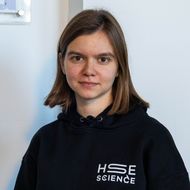
'Each cooling stage reduces the number of atoms in the sensor's working volume, which in turn decreases the accuracy of the device. Therefore, it is crucial to collect as many atoms as possible during the preparation of the initial ensemble to ensure that the accuracy of the quantum sensor remains high after all cooling stages.' This is how Daria Bykova, a doctoral student and teacher at the HSE Faculty of Physics, explains the key aspect of the problem.
Primary cooling to a temperature of around a hundred microkelvins significantly slows the thermal motion of atoms, helping retain them in a designated area of space. A decrease in temperature is achieved through laser radiation: exposure to a laser beam causes atoms to lose kinetic energy and move more slowly. Together, laser radiation and a magnetic field hold atoms in place long enough to conduct experiments, effectively forming a trap from which atoms cannot easily escape. In the next stage, which does not involve a laser field, atoms are cooled to a temperature of about a hundred nanokelvins, which is another thousand times lower.

'One could say that we use laser radiation to "push" the atoms toward the centre of the trap. They are trapped by a magnetic field and the pressure of light,' comments Bykova.
An atomic chip is an effective technology that enables researchers to reduce the size of quantum sensors and improve their energy efficiency. It generates a magnetic field near its surface, which is essential for creating traps, and allows for the cooling and localisation of atom ensembles near it.

At the Department of Laser Spectroscopy of the Institute of Spectroscopy (RAS), students and doctoral students from HSE University created traps using atomic chip technology. This configuration allowed them to retain atoms in the designated area for 4 seconds, a duration considered long in quantum technologies.
The researchers experimentally demonstrated that when using an atomic beam to load atoms into a MOT on a chip, the number of trapped atoms increases significantly compared to loading from atomic vapour in a vacuum chamber. The researchers also confirmed their ability to effectively control the loading of the atomic trap. They were able to adjust the position of the atomic beam using laser fields. This combination of technologies has significantly increased the loading speed while maintaining an ultra-high vacuum in the atomic chip area, compared to previous experiments.

'We discovered the optimal loading conditions in the MOT and trapped 4.9×10⁷ atoms, a number sufficient for stable operation. The ensemble's lifetime is 4.1 seconds, which is long enough to carry out the subsequent stages of deeper cooling and create a prototype of a quantum sensor,' explained Anton Afanasyev, Associate Professor at the Joint Department of Quantum Optics and Nanophotonics with the Institute for Spectroscopy (RAS) of the HSE Faculty of Physics, Senior Research Fellow at the Institute of Spectroscopy (RAS).
The study was supported by the HSE Academic Fund and carried out at the Department of Laser Spectroscopy of the Institute of Spectroscopy (RAS).
See also:

Russian Scientists Develop New Compound for Treating Aggressive Tumours
A team of Russian researchers has synthesised a novel compound for boron neutron capture therapy (BNCT), a treatment for advanced cancer that uses the boron-10 isotope. The compound exhibits low toxicity, excellent water solubility, and eliminates the need for administering large volumes. Most importantly, the active substance reaches the tumour with minimal impact on healthy tissues. The study was published in the International Journal of Molecular Sciences shortly before World Cancer Day, observed annually on February 4.
Scientists Discover Link Between Brain's Structural Features and Autistic Traits in Children
Scientists have discovered significant structural differences in the brain's pathways, tracts, and thalamus between children with autism and their neurotypical peers, despite finding no functional differences. The most significant alterations were found in the pathways connecting the thalamus—the brain's sensory information processing centre—to the temporal lobe. Moreover, the severity of these alterations positively correlated with the intensity of the child's autistic traits. The study findings have been published in Behavioural Brain Research.
Earnings Inequality Declining in Russia
Earnings inequality in Russia has nearly halved over the past 25 years. The primary factors driving this trend are rising minimum wages, regional economic convergence, and shifts in the returns on education. Since 2019, a new phase of this process has been observed, with inequality continuing to decline but driven by entirely different mechanisms. These are the findings made by Anna Lukyanova, Assistant Professor at the HSE Faculty of Economic Sciences, in her new study. The results have been published in the Journal of the New Economic Association.
HSE Scientists Develop Application for Diagnosing Aphasia
Specialists at the HSE Centre for Language and Brain have developed an application for diagnosing language disorders (aphasia), which can result from head injuries, strokes, or other neurological conditions. AutoRAT is the first standardised digital tool in Russia for assessing the presence and severity of language disorders. The application is available on RuStore and can be used on mobile and tablet devices running the Android operating system.
HSE Researchers Discover Simple and Reliable Way to Understand How People Perceive Taste
A team of scientists from the HSE Centre for Cognition & Decision Making has studied how food flavours affect brain activity, facial muscles, and emotions. Using near-infrared spectroscopy (fNIRS), they demonstrated that pleasant food activates brain areas associated with positive emotions, while neutral food stimulates regions linked to negative emotions and avoidance. This approach offers a simpler way to predict the market success of products and study eating disorders. The study was published in the journal Food Quality and Preference.
Russian Scientists Demonstrate How Disorder Contributes to Emergence of Unusual Superconductivity
Researchers at HSE University and MIPT have investigated how the composition of electrons in a superconductor influences the emergence of intertype superconductivity—a unique state in which superconductors display unusual properties. It was previously believed that intertype superconductivity occurs only in materials with minimal impurities. However, the scientists discovered that the region of intertype superconductivity not only persists but can also expand in materials with a high concentration of impurities and defects. In the future, these superconductors could contribute to the development of highly sensitive sensors and detectors. The study has been published in Frontiers of Physics.
HSE Scientists Take Important Step Forward in Development of 6G Communication Technologies
Researchers at HSE MIEM have successfully demonstrated the effective operation of a 6G wireless communication channel at sub-THz frequencies. The device transmits data at 12 Gbps and maintains signal stability by automatically switching when blocked. These metrics comply with international 6G standards. An article published on arXiv, an open-access electronic repository, provides a description of certain elements of the system.
AI vs AI: Scientists Develop Neural Networks to Detect Generated Text Insertions
A research team, including Alexander Shirnin from HSE University, has developed two models designed to detect AI-generated insertions in scientific texts. The AIpom system integrates two types of models: a decoder and an encoder. The Papilusion system is designed to detect modifications through synonyms and summarisation by neural networks, using one type of models: encoders. In the future, these models will assist in verifying the originality and credibility of scientific publications. Articles describing the Papilusion and AIpom systems have been published in the ACL Anthology Digital Archive.
Acoustic Battles for the Harem: How the Calls of Siberian Wapiti Reveal Their Status and Individuality
Researchers at HSE University, Lomonosov Moscow State University, and the A.N. Severtsov Institute of Ecology and Evolution of the Russian Academy of Sciences have studied the distinctive vocalisations of Siberian wapiti (Cervus canadensis sibiricus) stags during the peak of the mating season, when males produce rutting calls (bugles) to attract females (hinds) and deter rivals. The scientists have discovered how the acoustic parameters of these rutting calls reflect the stag's status—whether he currently holds a harem or is still attempting to acquire one—as well as his individual characteristics. The study has been published in Journal of Zoology.
Z-Flipons: How Specific DNA Regions Help Regulate Gene Function
Researchers at HSE University and InsideOutBio have applied machine learning to identify the location and functions of mirror-twisted DNA structures, known as Z-flipons, in human and mouse genomes. The scientists discovered which Z-DNA regions were conserved in both species throughout evolution and demonstrated for the first time that Z-DNA accelerates the process of creating RNA copies of genes. The findings will contribute to the development of new treatments for genetic diseases. The study has been published in Scientific Reports.