

‘High Grades Open Up Many Opportunities for You Here’
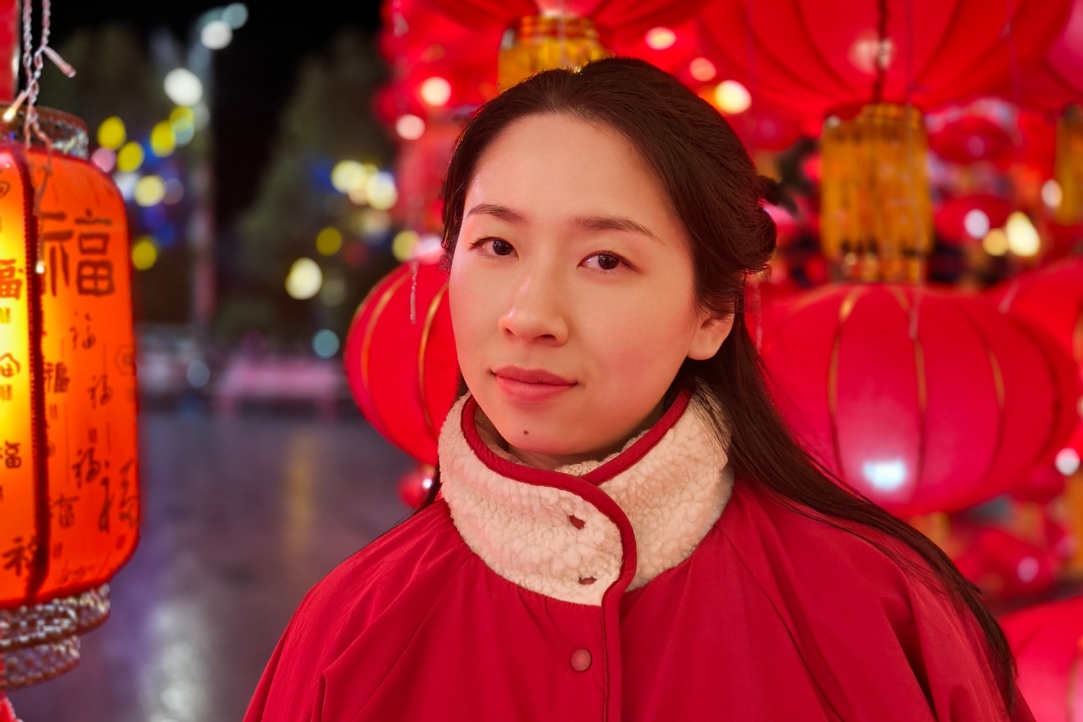
Bai Xinyi, 24, comes from Ankang, a small city in China. She is pursuing a master’s degree in Economics and Economic Policy, with a focus on Behavioural Economics, in the HSE Faculty of Economic Sciences. Below, she speaks about the application process, shares some details of her favourite courses, and reminisces about talking to friendly passers-by in the streets of Moscow.
Choosing the University for a Master’s Degree
I majored in Financial Mathematics at Southwestern University of Finance and Economics (SWUFE) in China for my bachelor’s degree. After graduating from SWUFE, I had planned to apply for computer-related programmes in European universities and received some offers. But then I met someone in an online application group who told me about his experience of applying for the Economics and Economic Policy (EEP) programme at HSE University.
I started researching HSE University in detail on the Internet and discovered that the university has a great reputation for its research in the field of economics and is highly internationalised
In addition, the EEP programme offers a scholarship of 15,000–25,000 roubles/month based on academic performance, as well as a tuition waiver, which rekindled my academic dream. If I could study in a two-year programme that focuses on economic research without financial pressure in a place with a strong faculty, this would give me a deeper understanding of whether I was suitable for academic work. On the other hand, I was curious about Eastern Europe. I had read many translated works from Russia, such as Nikolai Ostrovsky’s How the Steel Was Tempered, Mikhail Sholokhov’s And Quiet Flows the Don, Alexander Pushkin’s If by life you were deceived..., Maxim Gorky’s Childhood; In the World; My University, and so on. I was looking forward to experiencing another kind of life in this country.
Application Process: Clear and Convenient
I applied to the EEP programme through the HSE official website. I simply submitted my portfolio and waited for the results. However, some applicants do require going through additional interviews.
The application process was straightforward, clear, and convenient, similar to those of British and American universities
Therefore, I actually spent very little time preparing my materials. I would like to express my gratitude to Oxana Budjko from the International Office, who answered any questions I had quickly and efficiently. She also organized several meetings for new students before the start of the school year, which gave us a better understanding of the EEP programme and life in Moscow. In addition, the seminar ‘Preparation for Arrival and First Days in Moscow’ held by the International Student Support Centre helped me to understand the procedures I had to follow in Moscow.
In short, at HSE, you can always find a department and staff member to help you with any problem you may have
Studies: Professional, Responsible, and Serious
The teachers of the Faculty of Economic Sciences are very dedicated to their teaching. It is not unheard-of for them to still be answering our questions or sending notifications at two o’clock in the morning. Often, seminars are taught by doctoral students, who serve as the bridge between the lecturers and the students. They better understand the challenges that students may face throughout the course, and thus emphasize more practical information on these points. In short, I admire the teachers’ professionalism in their respective fields, and they are my role models for learning.
The EEP programme consists of compulsory courses such as Mathematics, Advanced Macroeconomics, Advanced Microeconomics, Advanced Econometrics, Python, and Methodological Research Seminar, as well as elective courses according to the research direction of interest. I am interested in the micro direction, so I chose courses such as behavioural economics, game theory, matching theory, etc. Among them, the most impressive one is the Methodological Research Seminar, which is taught by four professors. Each lecture explains the writing content and skills of one or two parts of an English paper, then assigns homework, and in the next seminar the students give presentations. This course helped me fully understand how to write a standard English paper. Another course that I enjoyed was the Random Assignment Problems course by Prof. Behrang Kamali Shahdadi, in which we had to select two top-journal papers relevant to the course, give presentations, complete an exam, and finally write a research proposal (RP). In this course, the professor guided us in exploring the main research methods and results of the Random Assignment field. The personal presentation allowed us to articulate clearly from the perspective of the paper writer, and the final RP reflected my thoughts on this direction as an output process.
This course, besides the knowledge itself, taught me how to independently research and explore a direction of interest
Overall, the EEP programme has a solid curriculum design, which may pose some difficulties for undergraduates who do not have an economics background; however, this is an effective test of whether they are ready to pursue a PhD in economics.
Student Community: Finding Friends
I feel a sense of belonging to the student community. There are not many students in our behavioural economics track, and, with the exception of myself, they are all Russian, so we chat online on VK. I also joined a Telegram group for international students, where we plan camping trips and other fun activities. In addition, I belong to the WeChat group for Chinese students, where we have dinner parties and attend events organized by the Chinese Embassy in Russia and the Moscow authorities.
I took part in HSE’s buddy programme and made a good friend. We still keep in touch. I learned about the buddy programme from the International Student Support website. All I had to do was fill in my personal information.

Life in Moscow: Winter and Summer are Two Different Worlds
I live near the Kurskaya metro station, which is very convenient. Moscow is a beautiful city, and its winter and summer seasons are like two different worlds. In winter, the day is short, and there is snowy salt everywhere, which is soft to step on; while in summer, the colours are more vibrant, and many shops have outdoor seating, which is very refreshing. During this time, all the buildings show their original colours. I love dusk in Moscow, the sunset is beautiful. In summer, I leave my home, walk to Red Square, and then follow the Moscow River towards Gorky Park, which is my favourite route. The Moscow River is sparkling, bands are playing rock music, the breeze is gentle, and families are sitting on the lawn drinking, chatting, and sunbathing, very cosy. Moscow also has many beautiful estates, such as Kolomenskoye. The most interesting part of the city is the Moscow metro, which often has beautiful surprises, thanks to the designers and workers who built them, making every station full of wonder.
The Moscow citizens I have met are mostly very friendly.
Once, when I was buying yoghurt, there was a lady who saw me using my phone to translate and choose, so she pointed out which yoghurt was the best choice
Another time, while buying kvass, there was an elderly woman who tried using simple English to make a recommendation, saying ‘this produce in Moscow, good!’. And when I went to the supermarket, there was a staff member who smiled and said ‘Nihao’ to me in Chinese; walking on the street, there were also elderly men and women who smiled and spoke with me, but it’s a pity that I can’t speak Russian well, so most of the time I couldn’t understand them and could only respond with a smile.
Plans for the Future and Advice to Future Students
I am planning to pursue a doctoral degree and hope to return to China to work as a university lecturer in the future.
I would like to share some advice with the future HSE master’s students.
HSE is a school that will exceed your expectations. If you are accepted and want to pursue an academic career, please do your best and study hard
High grades will open up so many opportunities for you here, such as teaching and research assistant positions. These jobs can help you gain more academic experience and funding, and they will also be very beneficial for your future doctoral applications. By the way, good grades can also help you find great teammates in the courses.
For students who do not want to continue in academia, there are many practical activities here. Do not squander the resources that HSE can offer you out of sheer laziness. Students from the same school have very different levels of achievement. One’s abilities are more important than degree itself.
Behrang Kamali Shahdadi
See also:

HSE Expands Cooperation with Chinese Universities
An HSE delegation, led by Rector Nikita Anisimov, visited China for negotiations with the administration of the country’s top universities. The parties agreed to expand bilateral scientific and educational collaboration and signed several documents. In particular, a strategic partnership agreement was established with Peking University, one of the oldest and most prestigious educational institutions in China.
ICEF HSE Takes Part in Study Abroad Fair in China among World's Leading Universities
On March 18, 2025, the Southwestern University of Finance and Economics (SWUFE), Chengdu, China welcomed its counterparts to the SWUFE Study Abroad Fair. Russia was represented for the first time at the fair by a delegation from HSE University, including members of ICEF.
‘HSE’s Industry Ties Are Invaluable’
Pan Zhengwu has spent the last seven years at HSE University—first as a student of the Bachelor’s in Software Engineering and now in the Master’s in System and Software Engineering at the Faculty of Computer Science. In addition to his busy academic schedule, he works as a mobile software engineer at Yandex and is an avid urban photographer. In his interview with the HSE News Service, Zhengwu talks about the challenges he faced when he first moved to Russia, shares his thoughts on ‘collaborating’ with AI, and reveals one of his top spots for taking photos in Moscow.
‘Looking for Talents’: HSE University Holds Entry Competitions in Three Chinese Cities
In early March, representatives of HSE University-St Petersburg organised a series of entry competitions for applicants from China. The exams were held in three cities—Beijing, Nanjing and Chengdu—at the Russian Cultural Centre (RCC) in Beijing and leading Chinese universities.
‘I See a Great Need for Organisations That Support Russian and Chinese Businesses’
Anastas Karagadaev, a graduate of the master’s programme ‘Science, Technology and Innovation Management and Policy’ at the Institute for Statistical Studies and Economics of Knowledge (ISSEK) at HSE University, achieved significant career success even during his student years. Back then, he actively participated in the Laboratory for Science and Technology Studies at ISSEK and founded his own start-up. Currently, he is working on developing projectswithin the Russia–China Centre for Innovation Cooperation in Nanjing.
‘Here at ICEF, I Study and Communicate with Intelligent People’
Yan Minghao, from China, is in his second year of master’s study at ICEF HSE and has a passion for mathematics and Russian culture. In this interview, he shares the experience of being an ICEF student, contributing to international research venues, and travelling around Russia.
HSE ICEF and China’s SWUFE RIEM Launch Double Master’s Degree
In January 2025, HSE University entered into a cooperation agreement with the Southwestern University of Finance and Economics (SWUFE) to implement a double master’s that joins ICEF’s Financial Economics programme with SWUFE’s Master's in Finance. Combining the best of China and Russia’s academic frameworks, this new degree offers a unique study-abroad experience. In this collaboration, HSE ICEF is partnering with the Research Institute of Economics and Management (RIEM), which was established at SWUFE in 2006 to facilitate top-level, international research and training in economics and finance.
‘My PhD Journey Was Made Possible by My Studies at HSE’
Tianxiong Yu, 25, completed his Master’s in Economics and Economic Policy at HSE University in Moscow. He spent the second year of the programme at the University of Luxembourg and has since enrolled there on a doctoral programme. While it is no longer a joint programme, HSE graduates continue to successfully pursue PhDs at international universities. Tianxiong spoke to the HSE News Service about his memories of his master’s course and how his time at HSE paved the way for his doctoral research.
HSE Strengthens International Ties: Meetings with University Delegations from China and Kyrgyzstan
On January 24, 2025, at the HSE University campus on Pokrovka, Rector Nikita Anisimov and representatives from key departments and internationalisation subdivisions met with delegations from South China Normal University and Kyrgyz National University named after Jusup Balasagyn. The discussions focused on opportunities for expanding cooperation in various fields.
‘Education and International Work Experience Are Key Factors for Innovation in Developing Economies’
On December 20, the Faculty of Economic Sciences hosted the Third Sino-Russian Workshop on Innovations and Innovativeness, organised in collaboration with the School of Economics at Shanghai University. Three representatives from each institution, including staff and PhD students, presented at the seminar. The participants discussed factors influencing company innovativeness, the role of leaders in R&D investments, and the impact of digital transformation.