

Hi-Tech Grief: HSE Researchers Explore the Pros and Cons of Digital Commemoration
Researchers at HSE University in Nizhny Novgorod have explored how technological advancements are transforming the ways in which people preserve the memory of the deceased and significant events. Digital technologies enable the creation of virtual memorials, the preservation of personal stories and belongings of the deceased, interaction with their digital footprint, and even the development of interactive avatars based on their online activity. However, these technologies not only evoke nostalgia and provide a sense of relief but can also heighten anxiety and fear, and delay the process of accepting loss. The study has been published in Chelovek (The Human Being).
The desire to commemorate significant people, events, and traditions has existed throughout human history. Architecture, religious rituals, family legends, and genealogical records are all examples of how we strive to preserve memory. This desire becomes especially significant when people confront the finiteness of life. Anxiety, fear, and grief drive us to ensure that we leave a mark, enabling others to reconstruct the images of those who are no longer around.
Historically, people have preserved the memory of the departed through texts such as obituaries, diaries, or vital records. Today, technology provides far more possibilities, including multimodal formats such as photos, videos, and audio, as well as virtual cemeteries, online memorial platforms, and even digital replicas of the deceased.

'We are at a fascinating juncture where one of the oldest rituals in human culture—funeral rites—is undergoing change. The shift from analogue to digital memory is shaping new approaches to commemoration. Thousands of people tune in to watch live broadcasts of the funerals of active internet users,' notes Timur Khusyainov, Deputy Dean of the Faculty of Humanities at the HSE Campus in Nizhny Novgorod.
According to the researchers, this transition to virtual space makes the topic of death less taboo and significantly broadens the number of mourners. New forms of grieving are emerging on social media, including virtual funerals, memorial posts, and the creation of online communities to honour the deceased, whose personal pages transform into memorial sites. According to some estimates, by 2060, Facebook (a banned organisation in the Russian Federation) may have more pages of deceased users than of living ones. However, this publicity alters the perception of death itself: once in the digital space, it becomes ubiquitous, commonplace, and loses its individual significance, distancing itself from the lived experience.
The deceased begin to exist in virtual space, continuing to 'live' through their digital footprints—not only the content they consciously created but also a vast array of other interactions, such as fitness tracker data, search history, and even the log of connections to a router.
The authors emphasise how the digitalisation of death is increasingly featured in popular culture. Films and television series, such as Black Mirror and Cybervillage (Кибердеревня), explore how digital technologies influence the memory of the departed and their role in modern life. This illustrates how much society cares about the topic and seeks to incorporate related developments into the context of daily life, bridging the possible and the real.
The collection and handling of digital footprints have also become an issue. After a person's death, their data—including correspondence, photos, social media posts, and device information—remains in the digital space. This raises a variety of ethical and legal concerns. For example, the EU General Data Protection Regulation (GDPR) protects the personal data of deceased individuals for 30 years after their death, but this regulation is fragmented. Legislation has been enacted in the USA to regulate access to digital heritage through online wills and powers of attorney.
Despite these measures, the issue persists. In some cases, platforms have become de facto owners of the data, allowing them to handle digital footprints at their discretion. This can result in information leakage, manipulation, and the creation of digital avatars without the consent of relatives or the will of the deceased. AI-powered chatbots enable the creation of digital avatars of deceased individuals, which, based on vast amounts of data, can virtually 'revive' a person, recreating their voice, speech patterns, and even habits.
According to the researchers, digital avatars of the deceased can be likened to the monster brought to life by Dr Frankenstein: an image constructed from digital footprints and artificially animated in virtual space. On one hand, it is powerful and human-like, but upon closer inspection, its flaws become apparent—errors occur when generating images, and language models often produce false information.
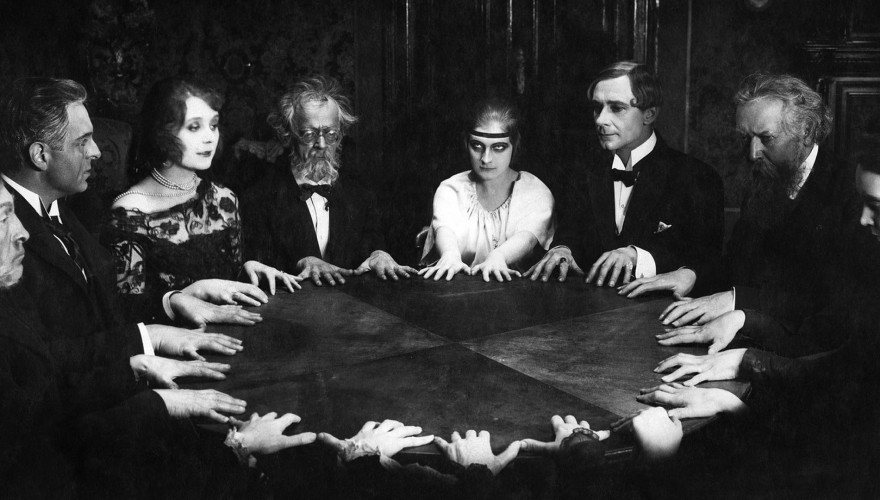
'A machine can be imbued with otherworldly qualities, giving rise to the myth of resurrection and immortality. Technologies serve as modern-day “spirit mediums,” similar to those used in Victorian-era séances, allowing us to interact with those "risen from the dead," whose number is growing,' Khusyainov notes.

'An important aspect of digital "resurrection" is its impact on the emotional experience of the living in relation to death and dying. On one hand, interacting with digital footprints helps people in their grieving process by fostering a sense of continued connection with the deceased. On the other hand, technologies can also hinder the process of accepting loss. Instead of confronting the finiteness of life, a person becomes immersed in the illusion of communicating with a digital "doppelgänger," which increases anxiety and the risk of retraumatisation,’ explains Ekaterina Urusova, co-author of the article, visiting lecturer at the HSE Campus in Nizhny Novgorod, and existential-humanistic psychotherapist.
See also:

Scientists Examine Neurobiology of Pragmatic Reasoning
An international team including scientists from HSE University has investigated the brain's ability to comprehend hidden meanings in spoken messages. Using fMRI, the researchers found that unambiguous meanings activate brain regions involved in decision-making, whereas processing complex and ambiguous utterances engages regions responsible for analysing context and the speaker's intentions. The more complex the task, the greater the interaction between these regions, enabling the brain to decipher the meaning. The study has been published in NeuroImage.
Scientists Present New Solution to Imbalanced Learning Problem
Specialists at the HSE Faculty of Computer Science and Sber AI Lab have developed a geometric oversampling technique known as Simplicial SMOTE. Tests on various datasets have shown that it significantly improves classification performance. This technique is particularly valuable in scenarios where rare cases are crucial, such as fraud detection or the diagnosis of rare diseases. The study's results are available on ArXiv.org, an open-access archive, and will be presented at the International Conference on Knowledge Discovery and Data Mining (KDD) in summer 2025 in Toronto, Canada.
Scientists Find Out Why Aphasia Patients Lose the Ability to Talk about the Past and Future
An international team of researchers, including scientists from the HSE Centre for Language and Brain, has identified the causes of impairments in expressing grammatical tense in people with aphasia. They discovered that individuals with speech disorders struggle with both forming the concept of time and selecting the correct verb tense. However, which of these processes proves more challenging depends on the speaker's language. The findings have been published in the journal Aphasiology.
Implementation of Principles of Sustainable Development Attracts More Investments
Economists from HSE and RUDN University have analysed issues related to corporate digital transformation processes. The introduction of digital solutions into corporate operations reduces the number of patents in the field of green technologies by 4% and creates additional financial difficulties. However, if a company focuses on sustainable development and increases its rating in environmental, social, and governance performance (ESG), the negative effects decrease. Moreover, when the ESG rating is high, digitalisation can even increase the number of patents by 2%. The article was published in Sustainability.
Russian Scientists Develop New Compound for Treating Aggressive Tumours
A team of Russian researchers has synthesised a novel compound for boron neutron capture therapy (BNCT), a treatment for advanced cancer that uses the boron-10 isotope. The compound exhibits low toxicity, excellent water solubility, and eliminates the need for administering large volumes. Most importantly, the active substance reaches the tumour with minimal impact on healthy tissues. The study was published in the International Journal of Molecular Sciences shortly before World Cancer Day, observed annually on February 4.
Scientists Discover Link Between Brain's Structural Features and Autistic Traits in Children
Scientists have discovered significant structural differences in the brain's pathways, tracts, and thalamus between children with autism and their neurotypical peers, despite finding no functional differences. The most significant alterations were found in the pathways connecting the thalamus—the brain's sensory information processing centre—to the temporal lobe. Moreover, the severity of these alterations positively correlated with the intensity of the child's autistic traits. The study findings have been published in Behavioural Brain Research.
Earnings Inequality Declining in Russia
Earnings inequality in Russia has nearly halved over the past 25 years. The primary factors driving this trend are rising minimum wages, regional economic convergence, and shifts in the returns on education. Since 2019, a new phase of this process has been observed, with inequality continuing to decline but driven by entirely different mechanisms. These are the findings made by Anna Lukyanova, Assistant Professor at the HSE Faculty of Economic Sciences, in her new study. The results have been published in the Journal of the New Economic Association.
Russian Physicists Discover Method to Increase Number of Atoms in Quantum Sensors
Physicists from the Institute of Spectroscopy of the Russian Academy of Sciences and HSE University have successfully trapped rubidium-87 atoms for over four seconds. Their method can help improve the accuracy of quantum sensors, where both the number of trapped atoms and the trapping time are crucial. Such quantum systems are used to study dark matter, refine navigation systems, and aid in mineral exploration. The study findings have been published in the Journal of Experimental and Theoretical Physics Letters.
HSE Scientists Develop Application for Diagnosing Aphasia
Specialists at the HSE Centre for Language and Brain have developed an application for diagnosing language disorders (aphasia), which can result from head injuries, strokes, or other neurological conditions. AutoRAT is the first standardised digital tool in Russia for assessing the presence and severity of language disorders. The application is available on RuStore and can be used on mobile and tablet devices running the Android operating system.
HSE Researchers Discover Simple and Reliable Way to Understand How People Perceive Taste
A team of scientists from the HSE Centre for Cognition & Decision Making has studied how food flavours affect brain activity, facial muscles, and emotions. Using near-infrared spectroscopy (fNIRS), they demonstrated that pleasant food activates brain areas associated with positive emotions, while neutral food stimulates regions linked to negative emotions and avoidance. This approach offers a simpler way to predict the market success of products and study eating disorders. The study was published in the journal Food Quality and Preference.