

Artificial and Augmented Intelligence: Connecting Business, Education and Science

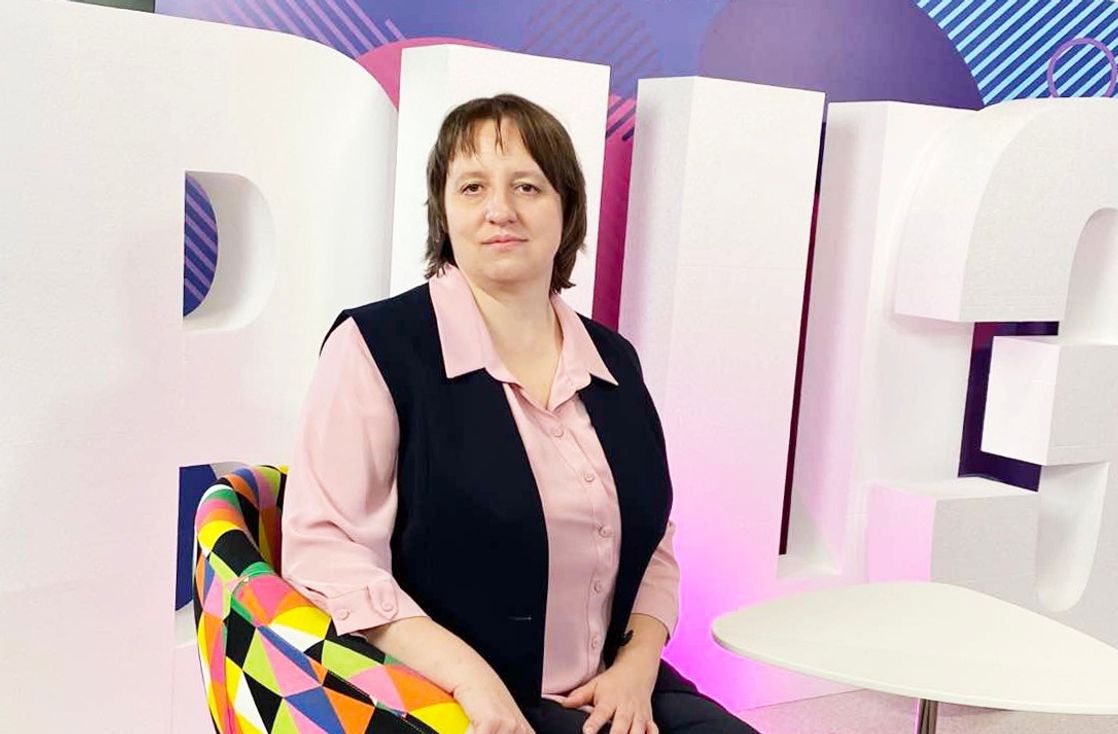
The history of AI research in Nizhny Novgorod dates back to the 1960s and 1970s. Today, AI technologies, from voice assistants and smart home systems to digital twin creation and genome sequencing, are revolutionising our life. Natalia Aseeva, Dean of the Faculty of Informatics, Mathematics and Computer Science at HSE Campus in Nizhny Novgorod, discusses how the advancement of AI connects science, business, and education.
— How do AI technologies benefit people?
— Experts identify two main concepts for using AI technologies. The first is when human activity is completely replaced by technology, which is known as artificial intelligence. The second concept is when AI enhances a person's abilities, eg quickly prepares decisions based on data, but the final decision-making remains with the person. This concept is known as augmented intelligence.
There are numerous well-known examples. We have all become accustomed to using chatbots and voice assistants for various purposes, as well as finding convenient and quick routes through navigational systems. All these products use AI technologies.
Then there are several socially significant areas where human involvement and decision-making, supported by augmented intelligence systems, are crucial. For example, in medicine, digital diagnostics and high-tech research powered by artificial intelligence can be highly useful. However, the final diagnosis and treatment decisions are still made by doctors, as we are all very different and medical treatment cannot be entirely entrusted to a computer.
— Starting in 2024, HSE Campus in Nizhny Novgorod is offering enrolment to the Bachelor's Programme 'Artificial and Augmented Intelligence Technologies,' created in partnership with the Neimark IT Campus. What prompted the launch of this programme in Nizhny Novgorod?
— The history of AI research in Nizhny Novgorod dates back to the work of scientists from the 1960s and 1970s. At that time, Professor Yuri Neimark worked on the theories that laid the foundation for computer vision and artificial intelligence technologies. In the 1990s, Western IT companies arrived in this rich research environment, which, in turn, fostered the growth of the city's IT community. The OpenCV computer vision library, developed in part by Nizhny Novgorod engineers, has become a landmark project in the field of AI.
Regarding the number of companies and specialists in this field, Nizhny Novgorod currently ranks among the top in the country, according to various estimates. Therefore, it is here that we will train highly sought-after specialists whose knowledge and skills enable them to tackle both applied and research challenges in artificial intelligence and machine learning.
— What mechanisms does the programme incorporate for students to build and practice their skills?
— For the second consecutive year, HSE University has ranked in the A+ group of leaders in terms of the quality of training specialists in AI. This means that the university’s faculty are leading researchers with A* publications, and the programme includes collaborative projects with industry partners, particularly with BigTech companies such as Alfa–Bank and VK. The presence of both of these factors is essential for students to develop the ability to independently create products and services based on data.
Each student of the Bachelor's Programme 'Artificial and Augmented Intelligence Technologies' will participate in leading conferences, research schools, and other events in the field of AI, and will be involved in project activities with research teams at HSE University and its partners, starting from the first year.
— What projects are scientists at HSE Campus in Nizhny Novgorod currently working on, and are there any partner programmes focused on the development of AI technologies?
— To create applied systems in the future, we must continually expand our scientific knowledge. The Faculty of Informatics, Mathematics, and Computer Science includes cutting-edge scientific laboratories, such as the Laboratory of Algorithms and Technologies for Network Analysis (LATNA) and the Laboratory of Theory and Practice of Decision-Making Support Systems (TAPRADESS). These laboratories conduct both fundamental and applied research in the field of artificial intelligence.
For example, specialists at the Laboratory of Algorithms and Technologies for Network Analysis have been developing new network models for data mining and artificial intelligence methods for computer vision, including industrial image recognition technologies for mobile devices.
In close collaboration with the TAPRADESS Laboratory, and within the framework of the Priority 2030 programme, staff members of the Faculty of Informatics, Mathematics, and Computer Science have been working on applied projects in the field of artificial intelligence related to medicine and education.
— Why is it so important today to develop AI projects and pursue formal education in this field?
— Active implementation of AI-enabled technologies in enterprises ensures higher speed and better quality of business processes. Companies need specialists with advanced knowledge and the ability to generate innovative ideas. Russia's current AI development strategy aims to increase the number of university graduates with qualifications in artificial intelligence fivefold by 2030 and to ensure that 85% of employed specialists have applied AI skills.
There are already numerous AI-focused projects at HSE Campus in Nizhny Novgorod, involving both our staff and students. We consider it a high-priority objective to advance and implement AI technologies across various areas of human life and society, including scientific disciplines and economic sectors.
In 2024, enrolment is underway for ten state-funded and forty fee-paying places in the Bachelor’s Programme 'Artificial and Augmented Intelligence Technologies.' Click here to learn more and apply.
See also:

Megascience, AI, and Supercomputers: HSE Expands Cooperation with JINR
Experts in computer technology from HSE University and the Joint Institute for Nuclear Research (JINR) discussed collaboration and joint projects at a meeting held at the Meshcheryakov Laboratory of Information Technologies (MLIT). HSE University was represented by Lev Shchur, Head of the Laboratory for Computational Physics at the HSE Tikhonov Moscow Institute of Electronics and Mathematics (HSE MIEM), as well as Denis Derkach and Fedor Ratnikov from the Laboratory of Methods for Big Data Analysis at the HSE Faculty of Computer Science.
AI vs AI: Scientists Develop Neural Networks to Detect Generated Text Insertions
A research team, including Alexander Shirnin from HSE University, has developed two models designed to detect AI-generated insertions in scientific texts. The AIpom system integrates two types of models: a decoder and an encoder. The Papilusion system is designed to detect modifications through synonyms and summarisation by neural networks, using one type of models: encoders. In the future, these models will assist in verifying the originality and credibility of scientific publications. Articles describing the Papilusion and AIpom systems have been published in the ACL Anthology Digital Archive.
HSE Researchers Develop Python Library for Analysing Eye Movements
A research team at HSE University has developed EyeFeatures, a Python library for analysing and modelling eye movement data. This tool is designed to simplify the work of scientists and developers by enabling them to efficiently process complex data and create predictive models.
‘Many Want to Create AI-Based Products and Become More Competitive’
In 2024, the online Russian-taught master’s programme ‘Artificial Intelligence,’ offered by the HSE Faculty of Computer Science, saw a record number of first-year students—over 300. What accounts for such a high interest in AI, how the curriculum is structured, and what new skills will graduates acquire? Elena Kantonistova, the programme’s academic director, shares more.
'I Would Like to Leave a Lasting Impact on Science'
Aibek Alanov pursues his own scientific research and leads two teams of scientists, one at HSE University and the other at AIRI. In this interview for the HSE Young Scientists project, he explores the parallels between today's AI researchers and early 20th-century physicists, discusses generative models, and shares his passion for bachata partner dancing.
HSE’S Achievements in AI Presented at AIJ
The AI Journey international conference hosted a session led by Deputy Prime Minister Dmitry Chernyshenko highlighting the achievements of Russian research centres in artificial intelligence. Alexey Masyutin, Head of the HSE AI Research Centre, showcased the centre’s key developments.
Drivers of Progress and Sources of Revenue: The Role of Universities in Technology Transfer
In the modern world, the effective transfer of socio-economic and humanities-based knowledge to the real economy and public administration is essential. Universities play a decisive role in this process. They have the capability to unite diverse teams and, in partnership with the state and businesses, develop and enhance advanced technologies.
AI on Guard of Ecology: Students from Russia and Belarus Propose New Solutions to Environmental Problems
An international online hackathon dedicated to solving environmental problems was held at HSE University in Nizhny Novgorod. Students employed artificial intelligence and computer vision to develop innovative solutions for image segmentation, predictive modelling (forecasting future events based on data from the past) of emissions and creating chatbots for nature reserves and national parks.
Taming the Element: How AI Is Integrating into the Educational Process Around the World
Artificial intelligence is gradually becoming an indispensable part of higher education. Both students and teachers use it to reduce the volume of routine tasks and expand their capabilities. The limitations and prospects of AI are discussed in the report ‘The Beginning of the End or a New Era? The Effects of Generative Artificial Intelligence (GAI) in Higher Education,’ published in the journal Modern Education Analytics, under the scientific supervision of HSE Academic Supervisor Yaroslav Kuzminov.
A New Tool Designed to Assess AI Ethics in Medicine Developed at HSE University
A team of researchers at the HSE AI Research Centre has created an index to evaluate the ethical standards of artificial intelligence (AI) systems used in medicine. This tool is designed to minimise potential risks and promote safer development and implementation of AI technologies in medical practice.